
Living on the Edge of Nature: The Proximity to Bannerghatta National Park
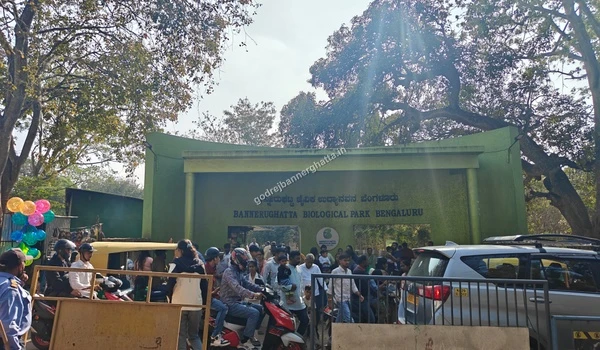
Godrej Bannerghatta is located on Bannerghatta Road in South Bangalore. This corridor is different from most real estate zones in the city. While many areas grow around IT parks or business hubs, Bannerghatta Road grows around something else, that is, nature.
This road starts from well-developed residential areas like JP Nagar and Jayanagar.
As it moves south, it gradually reaches a large forest belt near Bannerghatta National Park. This creates a rare situation where city infrastructure directly connects to a protected natural zone. For home buyers, this means they are not choosing between city comfort and natural surroundings. They are getting both in the same location. This is why the corridor is increasingly attracting eco-conscious buyers who value health, open space, and long-term liveability more than just short-term price growth.
The Real Meaning of “City Meets Forest”
The phrase “city meets forest” is often used in real estate marketing. But in the case of Bannerghatta Road, it is not just a slogan. It is a physical reality. Very few roads in Bangalore actually end near a biological park. Most urban corridors keep expanding into denser construction zones. Bannerghatta Road does the opposite. It ends at a protected green boundary. This has two important implications.
First, large-scale commercial overdevelopment is naturally limited. The forest acts as a growth barrier. This prevents the kind of extreme density seen in areas such as Outer Ring Road or Sarjapur Road. The second factor, environmental quality remains more stable. The presence of a forest belt supports better air quality, lower temperature variation, and higher green cover across surrounding residential zones.
So the value of this location is not about dramatic growth. It is about controlled, sustainable growth.
Bannerghatta National Park and Its Urban Impact
Bannerghatta National Park is not just a recreational place. It plays a serious environmental role in South Bangalore. It acts as a natural lung for the region. It supports biodiversity. It helps regulate groundwater and local climate patterns. It also limits excessive land conversion around its boundaries. From a real estate point of view, this creates a long-term advantage.
Areas near large protected zones usually experience:
- More stable land usage
- Lower environmental degradation
- Higher lifestyle appeal for families
- Strong end-user demand
Unlike artificial parks created inside layouts, this is a permanent natural asset. It cannot be replicated or replaced. That is why proximity to such a zone carries long-term lifestyle value, not just aesthetic value.
Distance from Godrej Bannerghatta Is Practical
Godrej Bannerghatta is located around 9.4 km from Bannerghatta National Park. Travel time is about 21 minutes by car, depending on traffic. This distance is important for two reasons.
It is close enough to feel connected to nature. Weekend visits are easy. Daily exposure to green surroundings is real. At the same time, it is not so close that wildlife restrictions or forest regulations affect daily urban living. Residents still get full city infrastructure — water supply, schools, hospitals, roads, and public services.
So the location sits in a practical middle zone. It benefits from the forest without being isolated from the city.
What Eco-Conscious Living Means Here
Eco-conscious living is not about slogans like “green project” or “sustainable homes”. It is about how the location actually supports a healthier lifestyle over time. In Bannerghatta Road, this shows up in three clear ways.
First, air quality is relatively better than in dense IT corridors. This is not because of one project, but because of the overall green belt in the region. Second, temperature variation is lower. Areas near large green zones heat up more slowly and cool down faster. This improves indoor comfort and reduces dependence on artificial cooling. Third, lifestyle patterns change. People tend to walk more, spend more time outdoors, and value open spaces when they live in greener environments. So, eco-living here is not a feature. It is a result of geography.
Design and Density at the Godrej Campus
The Godrej Bannerghatta campus spreads across about 33 acres of land. Nearly 80% of this area is kept as open space. This level of open space is rare in modern Bangalore projects. But the real value is not just in the size. It is in how the space is planned and used. Many projects show open space only on paper. In reality, they have small gardens placed between buildings. These spaces are often not very useful for residents. Here, the design is different.
The layout creates large and continuous green zones instead of scattered patches. This allows better airflow across the campus. It also reduces the feeling of crowding between buildings. Natural light reaches more homes. Wind movement is smoother. The overall environment feels more open and breathable.
From a planning point of view, this brings long-term benefits.
- It creates a better internal climate. Homes stay cooler and more comfortable.
- It reduces pressure on internal infrastructure, like roads and parking.
- It offers more usable community spaces for walking, sitting, and outdoor activities.
- It lowers long-term maintenance stress on shared facilities.
This kind of planning supports real daily living, not just good visuals for marketing. It makes the project more practical and comfortable over many years.
Why the Eco Pond Matters
The Eco Pond is not just a visual feature. It is designed to play a functional role inside the campus. In many urban projects, water bodies are added only for decoration. They look good, but serve little purpose.
Here, the Eco Pond has multiple practical uses.
- It helps collect and store rainwater.
- It supports groundwater recharge.
- It creates a natural cooling effect around nearby buildings.
- It supports small plants and local biodiversity.
Over time, this makes a real difference. The surrounding soil retains more moisture. This helps plants grow better. The area stays cooler during hot months. The overall green cover remains healthier and more sustainable. So the Eco Pond is not just about appearance. It supports environmental balance in a measurable and practical way.
Health Impact in the Long Term
The health impact of green living is often talked about. But it is also supported by real-world studies and daily experience. Living near large green zones is linked with better physical and mental health. People experience lower respiratory stress due to cleaner air. Along with this, mental health also improves because of reduced noise and visual stress.
People walk more and spend more time outdoors. Lifestyle-related problems like fatigue and anxiety reduce over time. For families, this is very important. Children get more open space to play. They spend less time indoors. This supports better physical development. For senior citizens, the impact is also strong. Walking becomes easier and safer. Outdoor movement feels more comfortable. Daily routines become less stressful.
These benefits do not appear in property price charts. But they strongly affect the quality of life over 10 to 20 years.
Why This Is a Stable Investment
From an investment point of view, Bannerghatta Road works differently from pure IT corridors. IT-driven areas usually see fast rental growth. But they also face sudden drops. This happens when companies move, jobs change, or office demand shifts.
So these areas show high volatility. Bannerghatta Road is more end-user driven. Most buyers here are families, doctors, teachers, retirees, and long-term professionals. These people buy homes to live in, not just to rent out. This creates a different investment pattern.
- Price growth is slower but more stable.
- Vacancy risk is lower because people stay longer.
- Resale demand remains consistent over time.
- The area is less affected by job market changes.
So returns may not be very fast. But risk is also lower.
This corridor suits investors who want steady growth and long-term safety, rather than short-term speculation.
Comparison with Typical Urban Growth Zones
| Typical Urban Growth Zones | Bannerghatta Road Pattern |
|---|---|
| Office hubs → traffic congestion → infrastructure stress → lifestyle compromise. | Residential demand → social infrastructure → green buffer → lifestyle stability. |
This difference is structural. It is not temporary. And structural differences matter more over 10 years than short-term price charts.
Moving Forward
Godrej Bannerghatta offers a rare type of city living in Bangalore. It is not meant for quick profits or short-term investment. It is designed for people who want to live here for many years. The main strength of this location is its geography. On one side, there is the city. On the other side, there is a large forest area. Between the two lies a residential corridor that connects both worlds.
Being close to Bannerghatta National Park is not only about leisure visits. It helps improve air quality. It keeps temperatures more comfortable. It also supports a healthier daily lifestyle. The wide open spaces and the Eco Pond inside the project add more value. They create a calm environment. They reduce crowding. They make the surroundings feel more natural and peaceful.
For buyers who care about long-term comfort, sustainability, and quality of life, Godrej Bannerghatta is more than just a home. It is a better way to live in the city.
